On 28 July 2026 the Minister for Primary Industries announced new Queensland drought declarations and the reinstatement of Drought Carry-on Finance Loans and Emergency Drought Assistance Loans for eligible Queensland primary producers. Full details of these loans will be available once administrative arrangements are finalised. Please monitor QRIDA’s website and social media channels for more information about when these loans will open to application and how to apply.
Image and text
Queensland producers are becoming more cautious about the outlook for their businesses, with industry optimism falling steadily over the past three years, even as the overall quality of rural debt remains strong.
New results from the Queensland Rural and Industry Development Authority’s (QRIDA) 2026 Client Satisfaction Survey show the proportion of respondents who described themselves as optimistic or very optimistic fell from 78.18 per cent in the 2024 baseline survey to 69.75 per cent in 2026, a decline of 8.43 percentage points.
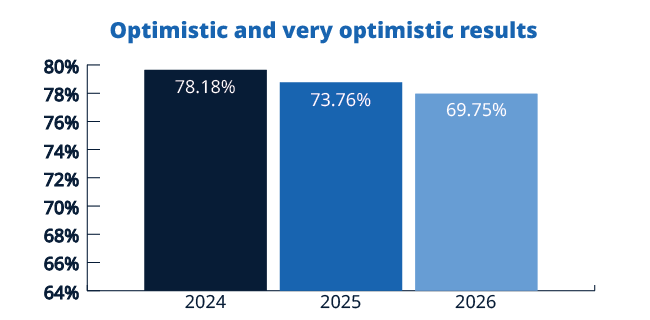
The findings suggest confidence across the rural sector has softened in response to rising input costs, market uncertainty and ongoing seasonal pressures. However, the latest 2025 Queensland Rural Debt Survey indicates the underlying financial position of many producers remains sound, with A and B+ debt quality broadly stable between 2023 and 2025.
QRIDA’s Rural and Industry Economist, John Gillespie, said the combined results point to a sector that is under pressure, but still showing resilience.
“Producers are clearly facing a more challenging operating environment than they were three years ago, and that is being reflected in lower confidence,” John said.
“At the same time, the rural debt data shows many businesses are continuing to manage their financial position well. That tells us this is more a story of caution than crisis.”
Of the 162 respondents who answered the economic outlook questions in QRIDA’s 2026 Client Satisfaction Survey, market conditions were the strongest driver of sentiment. Better commodity prices was the most cited factor influencing outlook, followed by new or expanding markets. High or increasing costs ranked third, ahead of worse commodity prices or tariffs, weather concerns and regulatory uncertainty.
The survey also found sentiment varied significantly depending on outlook. Producers with a negative view were more likely to point to rising costs, falling prices, adverse weather and government regulation. Those with a more optimistic outlook were more likely to cite stronger prices, expanding markets and better weather conditions.
The results highlight how closely confidence in the rural sector is tied to external conditions.
“What producers are telling us is that prices, costs and seasonal conditions are having the biggest influence on how they see the future,” John said.
“When those settings improve, confidence improves. When they become more volatile, businesses pull back.”
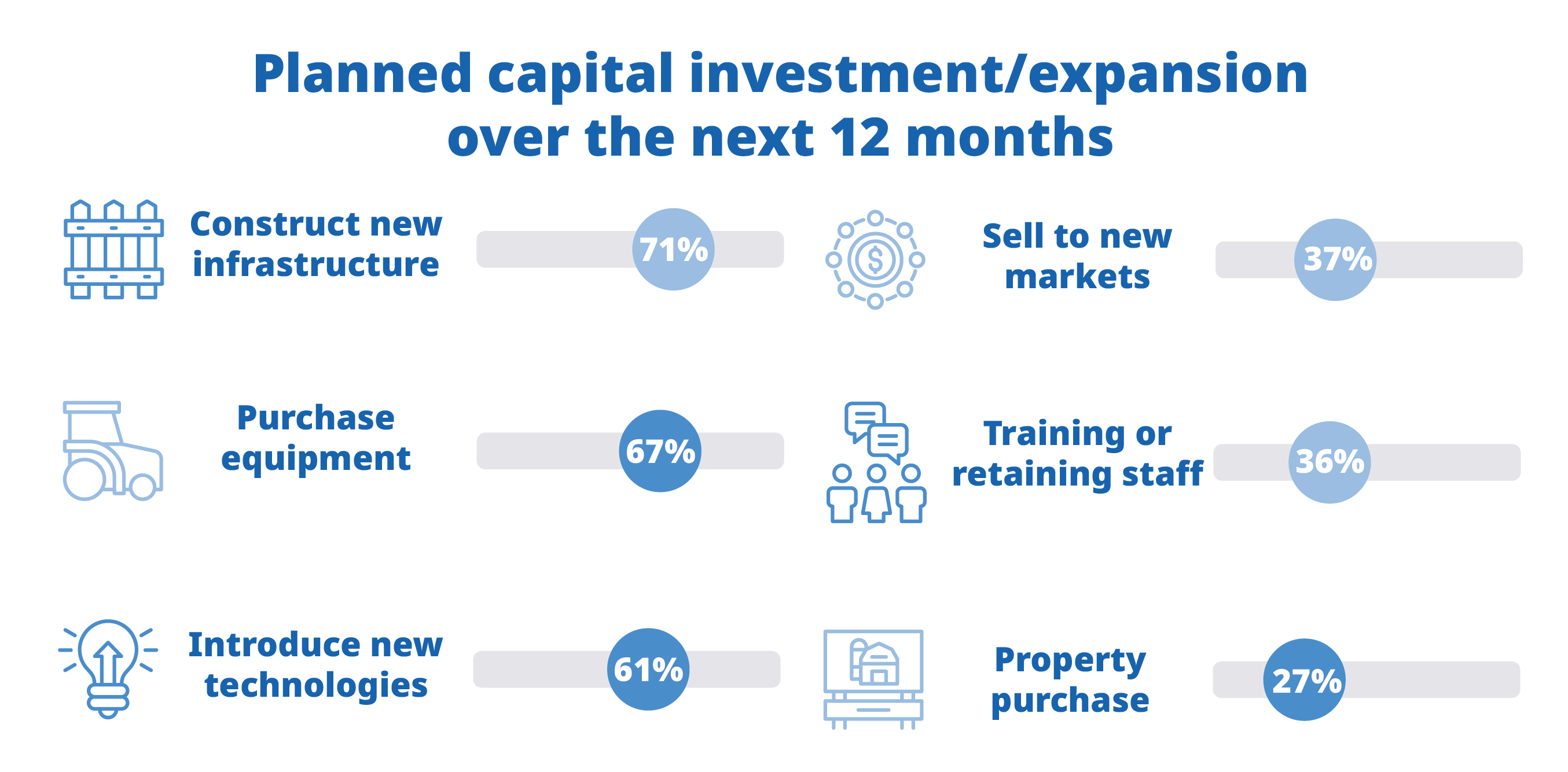
That caution is also flowing through to investment decisions. Among respondents who answered the investment question, 79 per cent said they were considering investment in at least two areas, with new infrastructure, equipment and technology emerging as the top priorities.
Importantly, interest in investment was strongest among respondents with a positive outlook, reinforcing the link between confidence and future business activity.
The survey also found mixed profitability across the sector over the past 12 months. While 30.46 per cent of respondents reported above-average or well above-average profit margins, 35.76 per cent reported below-average or well below-average results. Lower profitability was most commonly linked to weaker prices, unfavourable weather and higher production costs, while stronger profits were associated with better prices, favourable seasonal conditions and investment in new practices and technology.
The findings show confidence remains a key leading indicator for regional economic activity.
“Even with confidence moderating, many producers are still looking for opportunities to invest and grow,” John said.
“That resilience will be important as the sector navigates ongoing cost pressures, climate variability and changing market conditions.”
Read more results from QRIDA’s 2026 Client Satisfaction Survey. Read the full 2025 Queensland Rural Debt Survey.
QRIDA's 2025-26 Client Satisfaction Survey used independent research conducted by Marketing and Communications Research in July 2026.
Under the Rural and Regional Adjustment Act 1994 (Qld) and the Farm Debt Mediation Act 2017 (Qld), QRIDA is required by the Queensland Parliament to undertake a rural debt survey in Queensland every two years.
Rural debt is defined as the total indebtedness of all farmers or rural enterprises throughout Queensland, where the servicing of the rural debt relies primarily on rural generated income.